Month: September 2014

The Right and the Best

aplus11

Recent stories from NPR and Huffington Post have called to mind some things that I believe were formative in my life and representative of my generations’ experience with education. Often, children born in the 80’s and beyond have been critiqued as being “lazy” and “weak;” too prone to “instant gratification” and needing “constant encouragement.” As an educator, I see increasing insecurity in students and acknowledge its birth in my generation. The question is: if we see it getting worse, why aren’t we doing anything about it?

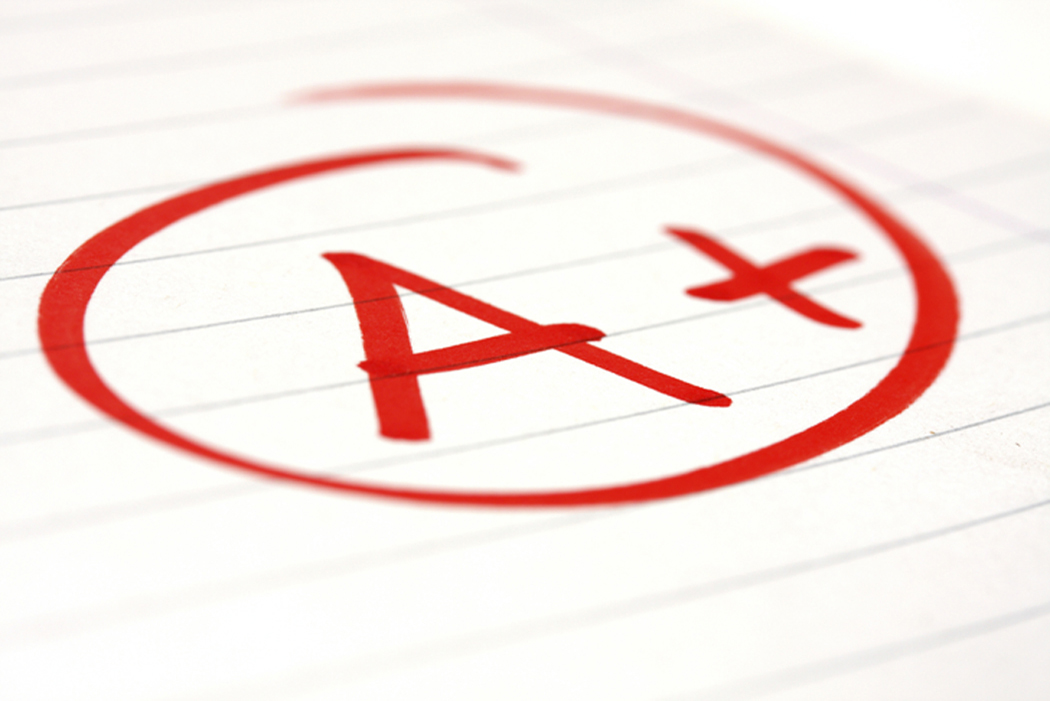
To illustrate my point, I’d like to tell three stories from my own past. The first was a parent-teacher conference that happened when I was in the third grade. I distinctly remember the sights, sounds, and smells of the classroom as my parents, teacher, and I gathered around the table. My teacher had some specific concerns about my academic performance in math. I was quite competent in other content areas, but my math grades were not as outstanding as my other achievements and my teacher felt they deserved some additional attention from my parents. From that moment on, I accepted the fact that I was “bad at math,” a label that I carry into adulthood. I realized at this moment that there was a “right” way to do things. 2+2=4. There was linear logic to math. It didn’t make sense to me. So I was “wrong.” This followed me through fractions, long division, algebra, and geometry. In fact, I had to take a math course 3 times in college before I found one that I could pass.

Fast forward to my first years as a choir teacher. Despite my poor math performance, I have enjoyed a successful academic career. Graduating from high school at the top of my class, I attended outstanding colleges for both my bachelor’s and master’s degrees, and was ready to embark on a successful career in teaching. Luckily, there wouldn’t be much math in my new profession. I had found ways to live a life where I could be “right,” at least in my mind. I had always been among the “best” in music, so I was excited to prove my worth.

Of course, as is often the case, the real world doesn’t reflect what we learn in school. Faced with the normal challenges of teaching human beings who were not entirely within my control, my first several years of teaching were a struggle. I felt that there was a “right” way to do things, and set about perfecting it in my little world. The first year I took choirs to the annual assessment, I longed for the validation that what my choirs and I were doing was “right.” I hoped that we would be among the “best.”

This was not what happened. I listen back on recordings from my first years teaching and hear choirs that were trying really hard. I had instilled in them a desire to be the best, as I think most teachers do in our current system. Sadly, we did not live up to the expectations for such a standard. I still remember being taken aside by the judges of that first contest after it was over. I’m sure they wanted to offer advice that would help me grow as a teacher and help my student’s succeed. All I heard from them was, “You were not the best. You were not right. This is what’s right. You were wrong.”

I would spend the next 3 years seeking out the advice of people in my field who I felt were the best. I would send recordings, literature selections, teaching techniques to them. I would spend hours listening to their advice. All the while, these well-intentioned mentors told me how they felt I could improve and the “best plan of action.” With each passing day, however, I came to realize that I was not the best. My conclusion then was, “since I’m not the best, I must be the worst.” I wandered through those days, disillusioned, and feeling like a failure. My students suffered from my insecure teaching.

The worldview that I present isn’t unique to my experience. Many people my age and younger can resonate with similar stories in their lives. From the first failed job interview to the first bad date, we all seek validation on what is “right” and many of us assume that failure must mean that we are “wrong.”

This perspective on this world is born out of what Ferdinand de Saussure, Jaques Lacan, and Claude Levi-Strauss would come to tern Structuralism. My armchair philosopher’s view of this is that, as people became aware of an increasingly complex and chaotic world in the face of World Wars and global economies, they sought out a way to create order. Looking to the past, they began to categorize things as either/or. The further down this path you go, you see a world where everything is on one of two sides of the coin. It simplifies a world with too many faces to handle.

Of course, as Jacques Derrida famously said, it also creates, ” a violent hierarchy” where “one of the two terms governs the other.” Post-structuralists like Derrida, Michael Foucault, and Roland Barthes have critiqued the structuralist world view. Also faced with the chaos of the 20th and 21st centuries, these writers suggest that chaos will prevail no matter how much order you impose upon it; a reality that is hard to dispute.

Couched in the arms of the structuralist world view, and aided by economic models designed by Henry Ford and the like, Sir Ken Robinson argues in his book Out of Our Minds , that modern education is designed to follow an assembly-line based system that,

…operate on the manufacturing principle of linearity; in that there are distinct sequential stages to the process. Each stage is meant to build logically on the one that precedes it; overall outcomes can be predicted with reasonable reliability. The idea is that if students progress in the prescribed way through the system, and especially if they complete college, they will emerge at the far end educated and prepared for whatever the world throws at them.

We see here that perhaps this problem isn’t simply the fault of a single generation. Perhaps this is just the logical conclusion of an education system born out of the industrial revolution and structuralist philosophy.

The aforementioned article by Mickey Goodman in Huffington Post would argue that this problem is more recent. She also might suggest that it is entirely my parents’ fault. She paints a picture of Generation X and Generation Y children plagued by “Helicopter Parenting.” Her belief is that this all stems from a tragic event in 1982 when several children died from poisoning in tampered Children’s Tylenol. She paints the picture of parents throwing away Halloween candy for fear that it might be poisoned. To this I would add my third story.

I grew up close to a major theme-park. I loved the roller coasters and would ride each of them with my mom and dad, never considering the danger we were in. I have a very vivid memory from one day in line for one of the rides. This was when I was 4 or 5 years old. Ahead of us in line was a young man who’s face I still recall. It was gaunt and pale. He was tall and bony, with hair that was prematurely thin. You could tell from looking at him that something was wrong. Though he looked to be no more than 30, his body looked aged and weary. He was leaning on the railing of the line ahead of us. Suddenly, my mother told me not to touch the railing anymore. I didn’t realize until much later that it was because she was afraid that the man might have AIDS, and didn’t know if I could catch it from touching the railing after him. This was one of the other consequences of being a member of Generation X. I was born in 1982, the same year the first reported case of HIV was made public.

Since then, we have been given more and more opportunities to be afraid. In a post- 9/11 culture, we are always on our guard for things to fear. And here we see another binary. The opposite of fear is safety. And so we create a list of either/ors:

Fear/Safety

Bad/Good

Wrong/Right

All of this leads to generations of children, not defined by a culture of “instant gratification,” as Goodman suggests, but rather by fear. Technology presents a wealth of things to be afraid of, to see as different, foreign, and other. As such, we see a world full of the other side of the coin. Using our trusty binary model, where everything is either a 1 or a 0, if it isn’t like us, it must be something to fear, something that is bad, something that is wrong. Coupled with an assembly-line education, we spend our entire lives avoiding the wrong, seeking out the right, and headed towards the best. Parents then encourage this way of life. Look both ways before crossing the street. Don’t talk to strangers.

Be afraid, be very afraid.

How do we encourage this way of thinking? By rewarding the best, of course. And so we create grading systems that say that Sally is smarter than John, all based on one child’s ability to find the “right” answer. We want to encourage as many children as possible, of course, and so now both Sally and John are smarter than Lupe, and so on and so forth until, as Corey Turner presents in a piece on Weekend Edition, everyone gets a trophy just for showing up. We have come to believe that anyone who doesn’t get a reward must in some way be weak, wrong, or worst. And so, in a desire to encourage every child, we lower standards, increase the chance to PERFORM on those standards, and hand out ribbons to everyone.

It’s hard to argue with.

No parent or teacher wants to tell a child that they aren’t worthy. And any school system that is designed to “produce” people who are “ready” for the world must be held to a standard. The question is, does the standard have to be something that can simply be said to be “right.”

A great deal of recent research in education points to the fact that we learn far more from making mistakes than we do from getting the right answer. Carol Dweck, in her book Mindsetsuggests that a “fixed-mindset,” in which there is a commonly accepted view that there must be one right answer, and that learners are either smart or not, right or wrong, best or worst, results in a culture of learning where people decide very early on what they can and can’t do. I believe this mindset’s natural consequence is the generation outlined by my stories here. Her suggestion is that perhaps we should look for a “growth-mindset” approach, in which learners are encouraged to assume that they are always capable of being better, and that there is always room for improvement. Educational theorists from Piaget, to Erikson, to Bloom’s taxonomy and Garnder’s Multiple Intelligences all support this idea. Salman Khan recently published an article entitled “The Learning Myth: Why I’ll Never Tell My Son He’s Smart” that I think eloquently illustrates a sea-change in the way we look at learning.

Modern-day economics is also supporting the innovation model. Successful companies in the 21st century are not those that follow a “proven” method for success. They don’t seek to replicate what is “right.” Rather Giants of contemporary industry like Steve Jobs and Jeff Bezos are always looking for a chance to fail and learn. In his Book Creativity, Inc.  Ed Catmull, the founder of Pixar, recounts a history and culture of failure that has led to two of the largest companies in their respective industries: Apple and Pixar. In it, he presents Kiichiro Toyoda as a successor to Henry Ford. In the existing industrial model, workers are discouraged from looking for error, but rather to mindlessly do the “right” thing over and over. In Toyota’s model, each member of the team is tasked with looking for something wrong, seeking out improvements, and chances to learn. There is less order in this model, but if you look at the innovation of Ford vs. Toyota in the last 30 years, I would argue that you could see which one works.

These ideas have been supported by authors like Sir Ken Robinson, Daniel Pink, Thomas Friedman, and Daniel Coyle. Each author presents a world where learners are encouraged to create, to innovate, and to explore. Children are taught to fail, to look for what’s wrong, and to embrace it. These are the qualities we should seek out in our next generation.

It turns out that the helicopter parenting, or tech-ridden desire for instant gratification are not the ultimate culprit. We should stop looking at whether participation trophies are the problem. Rather, we should see them all as symptoms of an economic, political, and educational system based in a bygone industrial model and influenced by a dying philosophy of structuralism.

What’s the answer then?

Teach kids to fail.

The next generation will need to know better than anyone that there isn’t a right answer to most questions but rather that each of us has our own perspective on the world. I often like to use two analogies to prove this point. The first is a famous illustration

old-lady-young-optical-illusion[1]

Upon encountering this picture, each of us can see a woman. We have a fixed idea on what age this woman is. If you have seen this picture before, then you know that there are actually two women pictured here. One of them is old and the other is young. If you look at it long enough, you might be able to see both. Here we have a binary: old/young. Whether you initially see the young woman or the old woman, you are right. There isn’t a “correct” answer here. One is not the “best.” Both perspectives are just different. We have to teach kids to seek out people who view the world from a different perspective and to learn from them. We have to teach kids to seek out “diverse” instead of “correct.”

Lastly, a story that I like to share with my students right before we get on the bus for the contest I mentioned at the beginning of this post. There is no better place to seek out failure than in the arts. What I learned after those first few years of struggling is that there was never going to be a right answer in how my choirs sang. I was never going to be the best, but neither was anyone else. That didn’t mean I should stop trying. Ultimately, what we seek out in the arts is beauty, not perfection. And much like the picture above, our perspective on beauty varies widely. So I ask my students, after months of seeking our idea of beauty, a simple question:

Raise your hand if you like sandwiches

Invariably, after I point out that a sandwich is any food that is held together between two other foods, every hand shoots up. Whether it be a hoagie, or a quesadilla, or a PB&J everyone likes some kind of sandwich. But if you gathered any three people in the same room, you would be hard pressed to find a group that could agree on which sandwich is the best. This is how I present our performance to them. We go to a room, and we sing music for people that we think is beautiful and compelling. The judges then give us a rating. This rating is based on their perspective of what is beautiful and compelling. It doesn’t mean that they are right and we are wrong or we are right and they are wrong any more than someone who likes Limburger cheese on a tortilla is right compared to someone who prefers beef-tongue on rye.  We all agree on the big picture: sandwiches are good, music is good. Or, pertaining to the wider theme here: learning is good. Our job isn’t to define what is right or wrong, but rather to encourage the dialogue. Insomuch as that means everyone gets a trophy for trying, then sign me up!

But that doesn’t mean that there are no standards.

It simply means that, rather than seeking the best, we should always seek to be better. We should encourage our students to seek rigor rather than right. We should reward kids for showing up, failing, and showing up again. This will instill in the coming generation a sense of strength, confidence, and grit that will prepare them confront their fear of the world, and ultimately conquer it.
 

Sleepy kids are less successful students

A recent report by the American Academy of Pediatrics renews the call for a closer look at school start times. This is not the first time that medical experts have called into question the hours of the school day, with an earlier study by the American Medical Association and The American Academy of Sleep Medicine in 2010, and other studies going as far back as 1994. An increasing majority of medical experts seem to find a compelling body of evidence that supports the need for later start times in High Schools and Middle Schools, and yet at least 43% of American public High Schools start classes before 8:00 AM. The question is, why would America’s educators ignore the advice of America’s doctors in doing what is the best medical health of America’s children?

The studies list a litany of ills caused by “chronic sleep restriction”–sleeping less than the recommended 8.5 to 9.5 per night. Among them are decreased mental acuity, impairments in executive function (functional memory, organizational skills, and time management), and low-levels of motivation. Additionally, there is a higher occurrence of significant medical disorders, including depression, anxiety, heart disease, and diabetes, among the 87% of high school students who reported sleeping 7.5 hours a night on average. Adolescents who don’t get enough sleep are more likely to be in a car accident, use prescription stimulants, and skip school. The list goes on and on, but the point is evident: teens need more sleep.

It’s not like the point really needed to be made in the first place, actually. Anyone who has spent longer than 30 minutes with a teenager in the morning knows that they are listless, have trouble communicating and processing information, and are generally just a pain to be around. Still, isn’t it nice to know that there is a medical reason for it?

The answer seems simple: make teenagers sleep more. The problem is that those pesky hormones that are transporting them from childhood to adulthood are doing a lot more than making them bigger and smelly. Biologically, our bodies get sleepy because of an increase in melatonin production. Melatonin is released through a variety of factors: including our response to ambient light, something called “sleep-wake homeostasis,” which is essentially our body’s response to being awake for long periods of time, and hormonal factors. The hormone surge in adolescents causes teenagers to biologically push melatonin-release until later at night; the study suggests between 11:00 PM and midnight. So your kids’ pesky desire to stay up in to the wee small hours of the morning isn’t just petulance: it’s also science.

The study does include a variety of other factors contributing to decreased sleep in teens, including increased light-exposure from electronic screens (phone screens, TVs, and computers). However, the single-greatest contributing factor faulted by the AAP is early school-start times in public schools. Remember, teenagers are biologically predisposed to stay awake until 11:00 or 12:00. Keeping that in mind, consider the fact that only 15% of American High Schools in the study start school after 8:30 AM and 40% start before 8:00 in the morning. Why would our nation’s education systems overwhelmingly ignore this advice?

Money, of course.

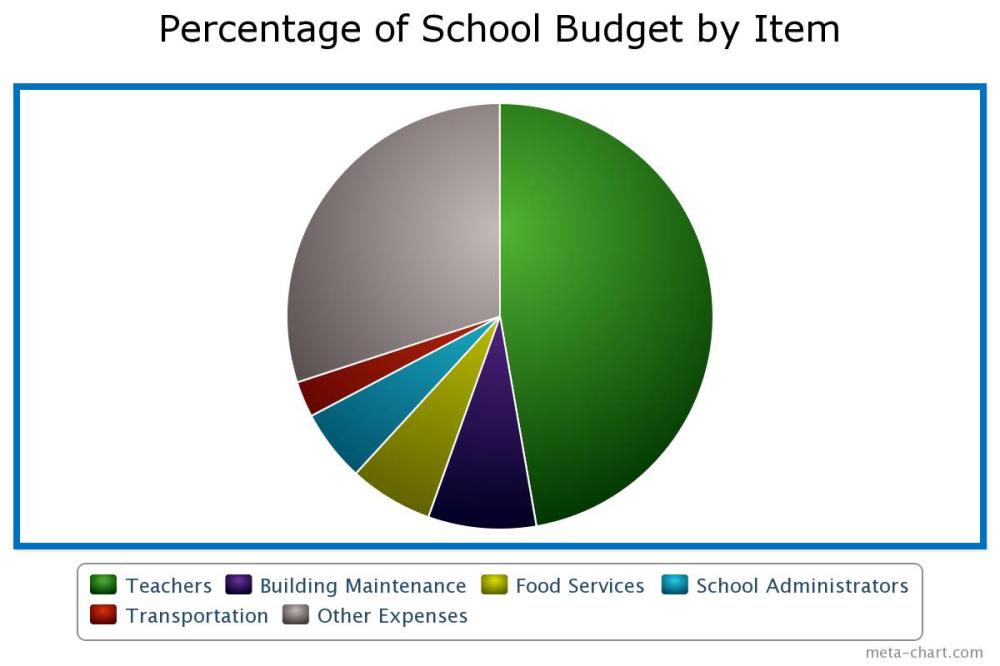
The Top Five biggest expenses in education*

  1. Teachers-52%
  2. Building Maintenance- 9%
  3. Food Services- 7%
  4. School Administration- 6%
  5. Transportation- 3%
pieChart_jpg

* Data is from representative school district from surveyed Texas ISDs


In a survey from school districts around the state of Texas, student transportation accounts for 2.5% of the entire school budget for a school year. That might not seem like a lot, but it can range from 4.9 to 36 million dollars annually. Considering the fact that 10% of this amount pays for fuel, the likelihood that that this amount will decrease in the near future is pretty slim. In fact, in the most recent study released by the Texas School Performance Review, increases in fuel costs for student transportation across the state has increased by 50% annually since 2001.


Transportation funding

Not to beleaguer the point on school finance–that can wait for another day–but these increases in costs have fallen entirely on the individual school districts to fund. Schools are funded from three main sources: federal funding, state funding, and property tax assessments. Federal funding is earmarked for specific expenditures which do not include transportation. The buses kids ride to school, the gas that fuels them, and the staff that support them are entirely paid for by the state and local districts. Sadly, as the cost of transportation has increased as much as 22% in recent years, the State of Texas still sees fit to calculate transportation using “linear density” groupings that have not changed since 1984.  Stagnant state funding for transportation–among other areas–has left individual school districts holding the bag. And while you may think that your rising property taxes could easily fit the bill, the organization FAST Texas suggests otherwise. The last time there has been a measurable increase in property-tax allocation toward education was 2004. Since then, overall property tax assessments have risen 23%. But that money isn’t going to schools.

Property Taxes

It comes as so surprise that money is tight in education. And there is nothing glamorous about school buses, but they are a sizable and necessary expense with districts organized as they are in Texas. Any student who lives more than two miles from their school round trip has to be provided a bus ride, whether they use it or not. So with funding short and expenses high, districts have looked for ways to maximize efficiency in school transportation. Their solution, which seems like a noble one, is to run a minimum number of buses for a maximum number of hours in the day. As such, you have to have different schools starting and ending at different times so the bus-driver can drop Billy off at School-A in time to pick up Yoselin on her street and drop her off at School-B. This means that there needs to be an average of three different school start times a day.

So who gets the early shift? The traditional thinking is that, in a three hour busing cycle, the earliest run must occur between 6:45 and 7:15 in the morning. Waiting at a bus-stop at 6:45 means sitting in the dark. And no school board in its right mind wants to have a second grader sitting at a bus-stop in the dark. So who gets the short-straw? The big strong high schooler. Seemingly, with after-school football practice and musical rehearsals, it is a good idea to start High School earlier so after-school activities can be done by 6:00. That way teachers aren’t having to work late at night. So it’s safer for the little kids, it’s convenient for the teachers, and it’s economical for the under-funded district.

One problem…

It’s scientifically unhealthy for the students.

1 in 5 high school students admits to falling asleep in class daily.

The question then is, who is our ultimate priority: our pocketbooks or our children? There are plenty of good reasons to keep the school day the way it is. And we’ve been doing things this way for quite some time, so if it ain’t broke, don’t fix it, right? Except for the fact that it is broken. These groggy, grumpy, unresponsive, forgetful teenagers that we keep complaining about might just be unhealthy, lethargic, and sleep-deprived. Perhaps if they were able to sleep in long enough to get a healthy night’s sleep, high school students would show up more readily to school and be stronger learners once they got there. 1 in 5 high school students admits to falling asleep in class daily. An even higher ratio admits to falling asleep doing homework at night. These kids need rest! Doctors have spent two decades giving us a major solution to poor performance, low-test scores, and high drop-out rates: let them sleep.  If they can’t go to bed earlier, we should let them wake up later. It’s the only humane thing to do.

But how do we do it?

There is a budgetary reality here. And I am not an expert on school-finance (don’t worry, I’m working on it). But I have a few thoughts.

The easiest solution is to get more buses on the road. Of course, it’s also the most expensive. This would require that either the state update its funding algorithm to the 21st century or local governments put a higher percentage of property-tax assessments toward school funding. Either one of them probably should be the solution to this problem. If schools had adequate funding, a lot of problems could be solved, and this would be one of them.

More buses=fewer start times

Even if there was a reduction to 2 bus routes per day it would allow for the first bell of the day to ring at 8:30 at one school and 9:15 at the next. Younger kids could take the earlier time and give the older kids, who stay up later, the chance to sleep in. Yes, then after-school activities would extend later into the evening, but teenagers are up later anyway, so we might as well occupy their time wisely. Would teachers be thrilled with this change? Probably not all of them, but we are a scrappy bunch, we’ll adjust.

Is there an App for that?

Uber and Lyft have completely revolutionized the way people move around metropolitan areas. The democratization of public transit has made it possible to do just what school buses have been doing for several decades: ensure there are riders in a vehicle as often as possible. Soon enough, driverless cars will make it possible for a vehicle to drop off a passenger and pick a new one up instantly, reducing traffic and the need for parking. Ride-share and public transportation initiatives have been slow to gain popularity in our state, but you see more people using a more efficient transportation model than in the past. And yet, we use a school-transportation model that has existed at least as long as my parents were riding to school. Could we find a way to use GPS technology to more efficiently get kids to school? Could there be a ride-sharing program between parents that would reduce the need for school-bus transportation? Perhaps a simple expansion of the existing bus-pass program would reduce costs school-specific transportation. School buses are inefficient in a number of ways, perhaps it’s time to do away with them. If we don’t have buses, we don’t have to worry about transportation dictating when kids go to school. Problem solved.

Smaller Schools

Texas education code mandates that students receive transportation to and from school if they live more than two miles from the campus. So why don’t we reduce school sizes so that schools only educate a geographic area of two miles? This is perhaps the most radical proposal to solve this seemingly minor issue, but it would certainly eliminate the problem. If schools didn’t have to spend money on transportation, there would be 3% of their budget free to spend on more useful allocations. There is no shortage of research suggesting that smaller schools are better for kids, which will get more attention here at a later date. This is perhaps best integrated at the High School level-where schools are the largest and the most inefficient. Additionally, school transportation is most wasted on older students; many of whom drive themselves to school anyway. So school buses run half-empty to and from high schools, and yet they dictate when they start. If you increased the number of high schools in a district, but decreased their size, you might be able to eliminate transportation costs altogether–at least in population-dense areas where costs are the greatest. Then schools can start whenever they want. Students can drive, carpool or ride their bikes and walk to school well-rested, on time, and ready to learn!

Or I guess we could just have mandatory nap time on the bus…

The sleep of the working man is pleasant

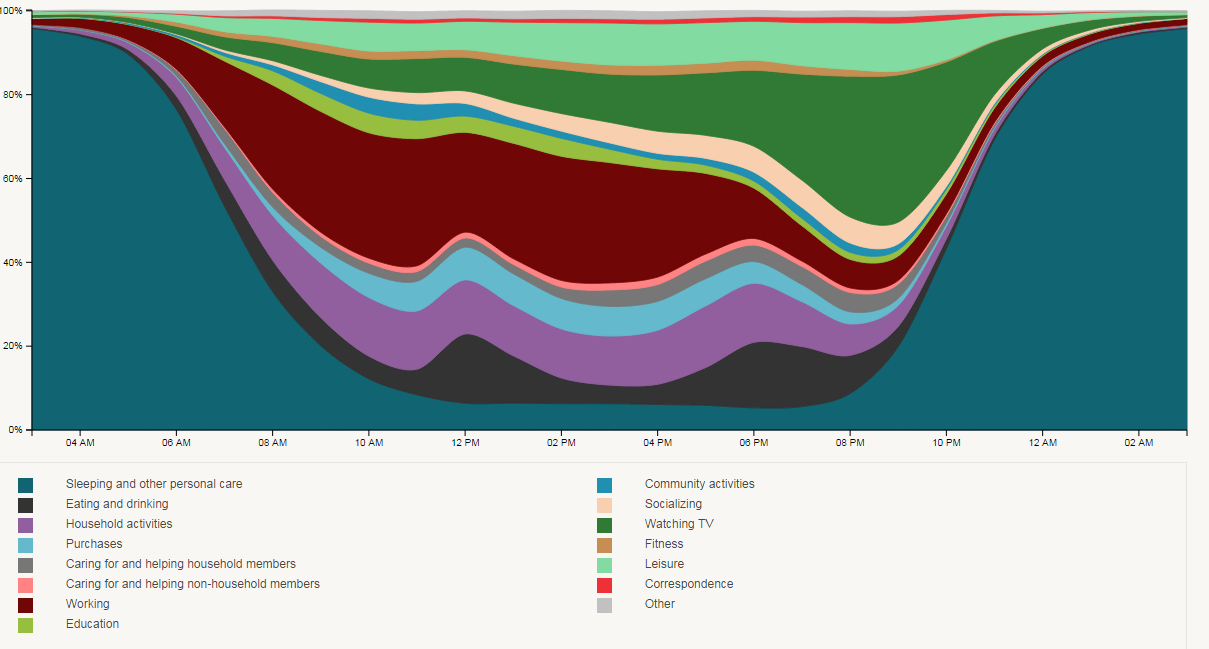
The Bureau of Labor and Statistics released a study this week on how American’s spend their time. This being Labor Day, I thought it was an interesting topic to explore. The website Retale created an informative info-graphic on the data.

How We Spend our Day

http://www.retale.com/info/busy-states-of-america/.


Obviously, we spend a great deal of time sleeping. I just wonder how soundly. How are you doing in that department? I’ve been thinking about sleep because of the quote at the header of this post. It’s from the Biblical book of Ecclesiastes. I saw it the other day as I was driving home from a political event that I attended. I was tired and frustrated. I had spent two hours knocking on doors of people’s houses, asking to speak to them about how they’d like their state to serve their needs. Most people didn’t want to speak to me. You see, I was knocking on their door from 6:008:00 PM and, if you’ll notice I was probably interrupting some valuable time in their day.

  • 20-30% of them were watching TV.
  • 10-20% were “relaxing” or reading (although I don’t really know what “relaxing” means)
  • 5% were “socializing”
  • 5% were shopping
  • 20% were cleaning the house, fixing dinner, and eating

And I was walking around their neighborhood trying to get them to spend a moment making their state a better place. How foolish am I?

As I drove home–hot, tired, and frustrated (it was a Tuesday night and I had been working all day, after all)–I saw the quote from Ecclesiastes on the marquee of a church. I thought to myself, “how nice. I will sleep well tonight.”

Now here’s the thing. If you look at the maroon section of this graph, you can see that the average American spends a great deal of time working. And I’m sure everyone is working very hard. The thing that I find appalling is how the rest of the graph is divided up. While it seems that we spend the majority of our time in noble pursuits like work, caring for loved ones, and maintaining a home; nearly 50% of this graph is made up of other, smaller categories like the ones I’ve listed above. Each of them on their own doesn’t seem like it’s taking up much time, but when you look at it all together (combine the greens, blues, and pinks) and you’ll see that the vast majority of our time is spent “doing other stuff.”

Of course, if you live in Houston, you should add another large chunk of time: sitting in traffic.

This is my point: I think American’s want America to be a greater place. I think all people want to be better than their current selves. But look at the line for “education.” At most, 4.5% of American’s are spending their time pursuing an education of any kind. That’s at less than 30 minutes a day. And yet, we spend nearly 3 hours of our day watching TV.

I don’t think we should all turn the television off for good and spend every waking moment being social activists, avid learners, and in meaningful conversation with others about how to make the world a better place. I just think some limits might be helpful. What if you committed to spending 2 hours a week improving yourself or your world (or both)? At first, you’ll find that, like me, you’ll be pretty lonely. Everyone else will be watching the football game while you’re taking a Spanish class. But this is how you change the world. You start doing something for yourself. Everyone around you will think you’re a little strange, but their quiet admiration will call into question how they spend their time. And then this graph gets flipped on its head, and suddenly your little corner of America is spending its time learning to ballroom dance, and speak Mandarin, and reading about the life of Winston Churchill, and participating in Town Hall Meetings. Heck, maybe someone will even run for City Council. And then the world IS a better place.

Two years ago, after a day of hard work, I would come home, pour a glass of wine, and turn on Bravo. That was it. That was the rest of my day. Or maybe I’d go out with some friends. I felt empty and unfulfilled. And, even though I was working incredibly hard, I felt restless when I slept. So I took a yoga class. And as I started to see the benefit in spending my “leisure” hours productively, I found myself wanting to learn as much as I could, from classes, books, and people. Learning is remarkably exponential that way. The more we do it, the more we want from it.

“What is the use of living, if it be not to strive for noble causes and to make this muddled world a better place for those who will live in it after we are gone?”
Winston Churchill

I firmly believe that the most voracious learners are the best teachers. When you passionately pursue knowledge, you can’t help but share it with the world. If our purpose on this earth is to leave it better than we found it and to leave a legacy for those who come after us–be it our families, our community, or our species–then we’d all better get to work.

Happy Labor Day everyone! Historically, today is a day when we recognize the work of organized labor (unions) in America. Grover Cleveland chose to set today aside to commemorate the thing that makes America great: hard working people working together to stand up for what they believe in. Labor Day isn’t about a day to rest. Labor Day is about celebrating how hard we work. So work hard! Not just in the time you spend earning a paycheck, but in the time you spend earning your place in history. Labor Day is about celebrating you, make sure you do something worth celebrating.