Education and Public Policy

Bias in School Discipline

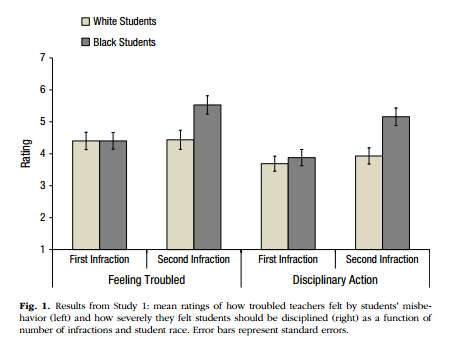
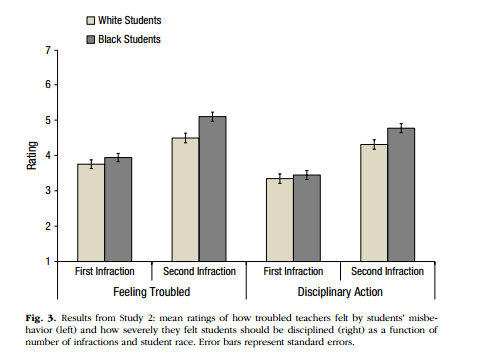
A recent study from Stanford University took pains to empirically prove that there is a significant bias among teachers when disciplining students from diverse racial backgrounds. The study, performed by Jason Okonofua and Jennifer L Eberhardt and chronicled in the journal Psychological Science, tracked discipline responses from 57 current teachers based on fabricated discipline referrals.

In the study, teachers were randomly given reports of student misbehavior and asked to rate the child as “troubled.” In a second experiment, the teachers were asked to decide whether to suspend the student from school based on their behavior.

Each report was assigned to a student name that would artificially assign the student a race. According to the author, “We manipulated student race by using stereotypically Black (Darnell or Deshawn) or White (Greg or Jake) names.” After receiving the discipline report, teachers were asked, “How severe was the student’s misbehavior? To what extent is the student hindering you from maintaining order in your class? How irritated do you feel by the student? and How severely should the student be disciplined?”

Initially, there was little difference between students who had stereotypical White names and stereotypical Black names. However, when teachers were presented with a second discipline report with the same name from each student, they were much more likely to believe the student identified as Black to be “troubled” and were even more likely to suspend the student from school.

study 1 TWO STRIKES Study 2 TWO STRIKES

As educators, we have a responsibility to take a hard look at our implicit bias and do what needs to be done to eliminate them.

This study provides further evidence to support a long-held belief, that a student’s race can play a significant role in how they are treated in school. Minority children are exponentially more likely to receive discipline consequences and be suspended from school for misbehavior than their White classmates. This study helps to prove that this problem has little to do with actual levels of misbehavior, and much more to do with inherent bias among educators.

The solution is certainly not simple. One significant step would be to rethink school discipline in general. Perhaps all children, regardless of race, should spend less time “in trouble” and more time figuring out how to function within their community (i.e. the school). This would require teachers and administrators to stop slamming kids with meaningless detentions, suspensions, and other disciplinary measures and replace it with a system of restorative justice and reconciliation designed to integrate kids into the classroom, rather than remove them from it.

This is hard work. But it needs to be done. The current study adds to a growing body of evidence that minority children (whether they be minorities of ethnicity, gender, sexual preference, religion or economic status) face a cornucopia of challenges each day when they walk on campus. The bias of people tasked with caring for and educating them should not be one of these challenges. As educators, we have a responsibility to take a hard look at our implicit bias and do what needs to be done to eliminate them. This will do more than just help our schools, it will help to quell the rampant school to prison pipeline in our country. Again, to quote the authors,

“Racial disparities in discipline are particular problematic because they contribute to the racial-achievement gap, increase the likelihood that Black students will drop out of school, and may then increase the probability that such youths will be incarcerated.”

Too often, we get bogged down with the challenges our students create in our classroom. Rarely to we take the time in those moments to consider the challenges these same children bring with them to our classroom. Perhaps if we did, we could stop labeling kids, and start helping them.


For more on this study,

Psychological Science. Okonofua, Jason A and Jennifer Eberhardt; Two Strikes: Race and the Disciplining of Young Students. May 2015. Vol. 26(5) 617-624.

The company behind “All Those Tests”

ba00862.jpg

In an extensive article in Politico, Stephanie Simon explores the vast influence of Pearson-a private sector corporation based in London- on the American education system.

For the full article click here.

There has been a great debate in our country over the past 20 years on the role of standardized testing in this country. It is perhaps the most divisive issue in education policy today. Many critique high-stakes standardized for wrenching control of the classroom from local campuses and teachers. Others claim that a standardized test is important to ensure quality instruction on all campuses. The truth probably lies somewhere between these two arguments. However, one thing is sure: the policy decisions are being made by a decreasing number of stakeholders. Chief among these are the executives of Pearson, who strategically aligned themselves to have vast influence on assessment and instruction, in addition to teacher training and accountability.

“The genius of Pearson is the interconnection among their markets…That gives Pearson its power.”

According to Simon:

“To prepare their students for Pearson exams, districts can buy Pearson textbooks, Pearson workbooks and Pearson test prep, such as a suite of software that includes 60,000 sample exam questions. They can connect kids to Pearson’s online tutoring service or hire Pearson consultants to coach their teachers. Pearson also sells software to evaluate teachers and recommend Pearson professional development classes to those who rate poorly — perhaps because their students aren’t faring well on Pearson tests.

‘The genius of Pearson is the interconnection among their markets,’ said (Michael) Apple, the education policy professor(at the University of Wisconsin-Madison). ‘That gives Pearson its power.’”

A great deal of Pearson’s power is the size of the company. Founded in 1844 as a construction firm, Pearson has grown to an international conglomerate with interests in education, news media, publishing, and entertainment. They own such well-known brands as Penguin Random House publishing, Madame Tussauds wax museum, and the quiz-show “Family Feud.” The company’s bread and butter comes from American schools, though. Pearson’s international profits for education alone exceeded $1 billion. 55% of that came from its North American education division. While much of that money goes into research and development, Pearson maintains a massive lobbying effort, both in Washington and in local state houses. Some estimates show that Pearson’s non-profit division spent $1 million in Texas alone lobbying law makers.

The size of the company combined with its lobbying interests have afforded it the power to earn No-Bid contracts, both at the district and state levels. The brands represented by Pearson (and many of its subsidiaries) have become so ubiquitous with assessment and instruction that many lawmakers do not give a second thought to using them as their sole-source provider. Many critique this monopoly as the reason standardized testing has been largely inefficient and ineffective. However this trend seems to be changing.

Again, Simon says:

“[A] big blow came this fall in the Lone Star State when Education Commissioner Michael Williams declined to renew Pearson’s $90 million-a-year contract to run the Texas standardized testing program.

The state auditor had ripped into the contract in a 2013 report that concluded it was far too vague to allow for effective oversight by the Texas Education Agency. The contract had so few details about the costs of each element that when the legislature eliminated 10 of the 15 tests required for high school graduation, state officials had to rely on Pearson to tell them how much they’d save.

Texas launched a competitive bidding process for new exams and is now reviewing the proposals.”

This will have a major impact on the future of assessment in our state. If other companies are allowed the opportunity to provide services to local ISDs and state assessments, the market will drive improvement. Perhaps Pearson will continue to be the best. But some competition is just what Texas needs to keep this massive company honest, and make sure they are doing what’s best for our students, and not what’s best for their bottom line.

For too long, “these tests” have borne the brunt of the criticism. This critique ignores the bigger picture and the value of testing in the school system. Assessment is a valuable tool for ensuring student success across geographic and socio-economic strata. It is also important as a formative tool for knowing what goals to set for classroom learning. However, when one company monopolizes control over an industry, innovation suffers.

Local campuses and districts need to be able to find resources that will work for their teachers and students. Much of those resources can be developed by the teachers and administrators themselves. And when districts need to outsource some of the work, there needs to be room for small upstarts to develop useful and innovative content. Of course, all of this needs money. The answer lies in where state legislatures allocate funds. As Texas moves forward into a new budgetary biennium, Texans need to encourage our lawmakers to move funding away from a major foreign corporate interest, and toward the wellbeing of Texas schools, Texas Teachers, and Texas children.

What the President’s Budget Says about American Education

Barack Obama

The Presidential Budget for 2015 says a great deal about President Obama’s priorities for the future of our country. As a part of a broader theme on Middle Class Economics, he devoted a significant portion of the budget to Education reform. For the full text on the President’s requests for education funding, click HERE.

Here are the bullet points:

  • $750 Million for Preschool Development Grants and a $1.5 Billion increase for Head Start Funding-both initiatives would dramatically increase funding to provide quality education to all American children as young as 3 years old.
  • $1.1 Billion increase to Title 1 Funding for low-income schools that use the money for evidence-based improvements to student outcomes.
  • $11.7 Billion for Special Education Services
  • $773 Million to provide services for English Language Learners
  • $8 Billion in funds to help recruit, train, and retain high-quality teachers.
  • $556 Million in School Improvement Grants and $125 Million in funding to develop New School Models that enact evidence-based reforms and reimagine American High Schools.
  • $375 Million in Charter School Funding
  • $300 Million in funding for research on innovation and effective practices in education.
  • And, of course, free Community College for all Americans.

This whopping sum of money might seem astronomical, but is actually a relatively small portion of the federal budget. Of course, very little of this funding will ever see the light of day. But that was never the point, was it?

I was re-watching an old episode of The West Wing the other night in which Alan Alda, who plays a Republican candidate for president, is speaking to a democratic White House staffer. He talks about the fact that the framers of the Constitution never intended for members of the United States government to trust one another. This is why they invented the system of checks and balances. The branches of government are designed to keep us from getting along and agreeing on everything. He argues that this piece of history has been the bedrock of our Nation’s strength, and I tend to agree.

If I had my way, every dime of this funding would get minted tomorrow. Of course, if I had my way, the federal government would go broke. Even if the wealthiest Americans and our Corporate partners footed their fair share of the bill (which they should), there will never be enough money to help everyone Democrats want to help. And even if there was, a Republican congress would never let us spend it all. And that’s OK. We need to have a push and pull on government spending. It’s good that no single person gets to say where we spend our money, and what our national priorities are. A legislative body that marches lockstep with one another will likely fall, like lemmings, off a cliff. The process allows room for productive debate. This Budget puts education at the forefront of that debate.

President Obama has spent much of his presidency fighting for broader access to opportunity. How that is enacted is anybody’s guess, but I think it’s a noble pursuit nonetheless. His 2015 Budget isn’t a line-item report, but rather a list of priorities to put America to work for Americans. What I see when I read his funding requests for education is a prescient point.

In the State of the Union, President Obama pointed out that, for the first time in a century (at least), a generation of Americans will not receive more education than their parents. Coupled with consistent rhetoric from employers that the incoming workforce lacks the skills and ethic they need to be productive in 21st century jobs, we see a crucial priority for our country. The way we educate our Nation’s youth isn’t working, We need to do more.

Schools will likely not see much of the money President Obama requested for education. American’s will likely not receive a free and compulsory education that extends far beyond their 18th birthday anytime soon. But we can look at ways to change the system. We can find opportunities to innovate instruction, broaden access, and deepen knowledge right now. This is how we will show state and national legislators that schools are worth the investment. Clearly, Americans are primed for a conversation on getting schools to work again. As educators, our first priority should be to get to work on schools that actually do work. The money will follow!

Sleepy kids are less successful students

A recent report by the American Academy of Pediatrics renews the call for a closer look at school start times. This is not the first time that medical experts have called into question the hours of the school day, with an earlier study by the American Medical Association and The American Academy of Sleep Medicine in 2010, and other studies going as far back as 1994. An increasing majority of medical experts seem to find a compelling body of evidence that supports the need for later start times in High Schools and Middle Schools, and yet at least 43% of American public High Schools start classes before 8:00 AM. The question is, why would America’s educators ignore the advice of America’s doctors in doing what is the best medical health of America’s children?

The studies list a litany of ills caused by “chronic sleep restriction”–sleeping less than the recommended 8.5 to 9.5 per night. Among them are decreased mental acuity, impairments in executive function (functional memory, organizational skills, and time management), and low-levels of motivation. Additionally, there is a higher occurrence of significant medical disorders, including depression, anxiety, heart disease, and diabetes, among the 87% of high school students who reported sleeping 7.5 hours a night on average. Adolescents who don’t get enough sleep are more likely to be in a car accident, use prescription stimulants, and skip school. The list goes on and on, but the point is evident: teens need more sleep.

It’s not like the point really needed to be made in the first place, actually. Anyone who has spent longer than 30 minutes with a teenager in the morning knows that they are listless, have trouble communicating and processing information, and are generally just a pain to be around. Still, isn’t it nice to know that there is a medical reason for it?

The answer seems simple: make teenagers sleep more. The problem is that those pesky hormones that are transporting them from childhood to adulthood are doing a lot more than making them bigger and smelly. Biologically, our bodies get sleepy because of an increase in melatonin production. Melatonin is released through a variety of factors: including our response to ambient light, something called “sleep-wake homeostasis,” which is essentially our body’s response to being awake for long periods of time, and hormonal factors. The hormone surge in adolescents causes teenagers to biologically push melatonin-release until later at night; the study suggests between 11:00 PM and midnight. So your kids’ pesky desire to stay up in to the wee small hours of the morning isn’t just petulance: it’s also science.

The study does include a variety of other factors contributing to decreased sleep in teens, including increased light-exposure from electronic screens (phone screens, TVs, and computers). However, the single-greatest contributing factor faulted by the AAP is early school-start times in public schools. Remember, teenagers are biologically predisposed to stay awake until 11:00 or 12:00. Keeping that in mind, consider the fact that only 15% of American High Schools in the study start school after 8:30 AM and 40% start before 8:00 in the morning. Why would our nation’s education systems overwhelmingly ignore this advice?

Money, of course.

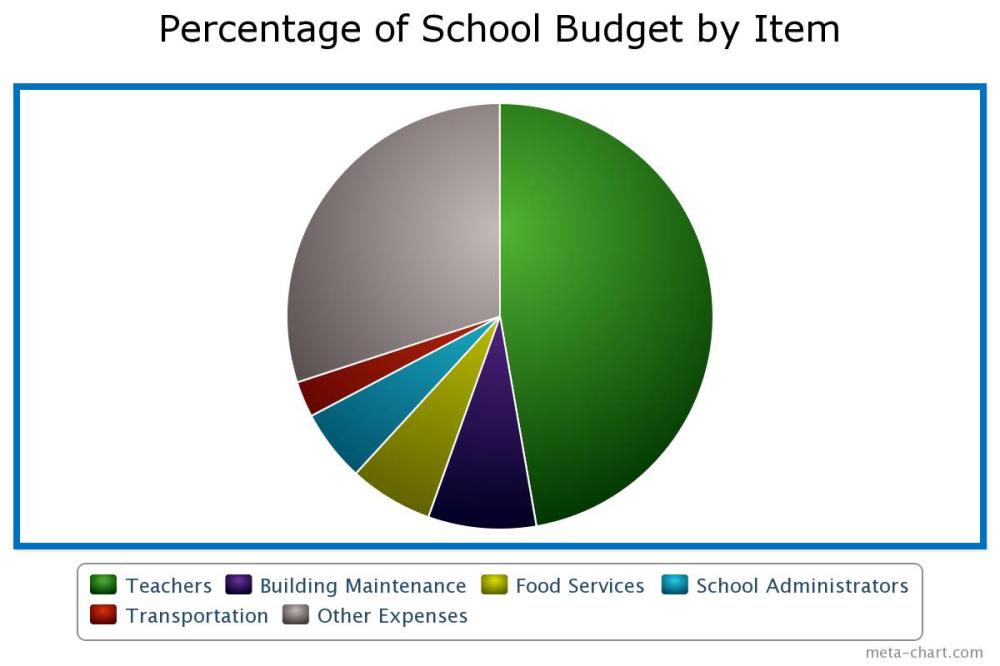
The Top Five biggest expenses in education*

  1. Teachers-52%
  2. Building Maintenance- 9%
  3. Food Services- 7%
  4. School Administration- 6%
  5. Transportation- 3%
pieChart_jpg

* Data is from representative school district from surveyed Texas ISDs


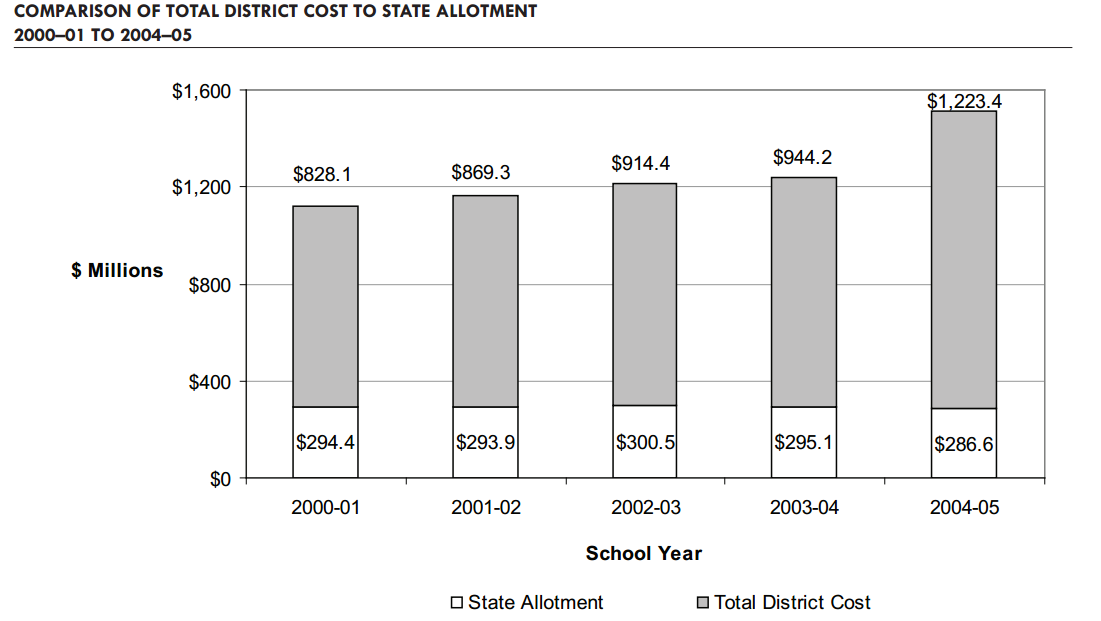
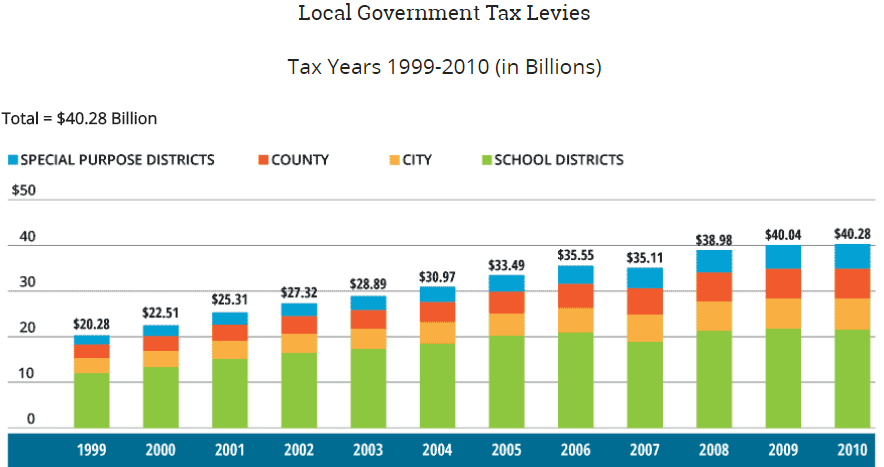
In a survey from school districts around the state of Texas, student transportation accounts for 2.5% of the entire school budget for a school year. That might not seem like a lot, but it can range from 4.9 to 36 million dollars annually. Considering the fact that 10% of this amount pays for fuel, the likelihood that that this amount will decrease in the near future is pretty slim. In fact, in the most recent study released by the Texas School Performance Review, increases in fuel costs for student transportation across the state has increased by 50% annually since 2001.


Transportation funding

Not to beleaguer the point on school finance–that can wait for another day–but these increases in costs have fallen entirely on the individual school districts to fund. Schools are funded from three main sources: federal funding, state funding, and property tax assessments. Federal funding is earmarked for specific expenditures which do not include transportation. The buses kids ride to school, the gas that fuels them, and the staff that support them are entirely paid for by the state and local districts. Sadly, as the cost of transportation has increased as much as 22% in recent years, the State of Texas still sees fit to calculate transportation using “linear density” groupings that have not changed since 1984.  Stagnant state funding for transportation–among other areas–has left individual school districts holding the bag. And while you may think that your rising property taxes could easily fit the bill, the organization FAST Texas suggests otherwise. The last time there has been a measurable increase in property-tax allocation toward education was 2004. Since then, overall property tax assessments have risen 23%. But that money isn’t going to schools.

Property Taxes

It comes as so surprise that money is tight in education. And there is nothing glamorous about school buses, but they are a sizable and necessary expense with districts organized as they are in Texas. Any student who lives more than two miles from their school round trip has to be provided a bus ride, whether they use it or not. So with funding short and expenses high, districts have looked for ways to maximize efficiency in school transportation. Their solution, which seems like a noble one, is to run a minimum number of buses for a maximum number of hours in the day. As such, you have to have different schools starting and ending at different times so the bus-driver can drop Billy off at School-A in time to pick up Yoselin on her street and drop her off at School-B. This means that there needs to be an average of three different school start times a day.

So who gets the early shift? The traditional thinking is that, in a three hour busing cycle, the earliest run must occur between 6:45 and 7:15 in the morning. Waiting at a bus-stop at 6:45 means sitting in the dark. And no school board in its right mind wants to have a second grader sitting at a bus-stop in the dark. So who gets the short-straw? The big strong high schooler. Seemingly, with after-school football practice and musical rehearsals, it is a good idea to start High School earlier so after-school activities can be done by 6:00. That way teachers aren’t having to work late at night. So it’s safer for the little kids, it’s convenient for the teachers, and it’s economical for the under-funded district.

One problem…

It’s scientifically unhealthy for the students.

1 in 5 high school students admits to falling asleep in class daily.

The question then is, who is our ultimate priority: our pocketbooks or our children? There are plenty of good reasons to keep the school day the way it is. And we’ve been doing things this way for quite some time, so if it ain’t broke, don’t fix it, right? Except for the fact that it is broken. These groggy, grumpy, unresponsive, forgetful teenagers that we keep complaining about might just be unhealthy, lethargic, and sleep-deprived. Perhaps if they were able to sleep in long enough to get a healthy night’s sleep, high school students would show up more readily to school and be stronger learners once they got there. 1 in 5 high school students admits to falling asleep in class daily. An even higher ratio admits to falling asleep doing homework at night. These kids need rest! Doctors have spent two decades giving us a major solution to poor performance, low-test scores, and high drop-out rates: let them sleep.  If they can’t go to bed earlier, we should let them wake up later. It’s the only humane thing to do.

But how do we do it?

There is a budgetary reality here. And I am not an expert on school-finance (don’t worry, I’m working on it). But I have a few thoughts.

The easiest solution is to get more buses on the road. Of course, it’s also the most expensive. This would require that either the state update its funding algorithm to the 21st century or local governments put a higher percentage of property-tax assessments toward school funding. Either one of them probably should be the solution to this problem. If schools had adequate funding, a lot of problems could be solved, and this would be one of them.

More buses=fewer start times

Even if there was a reduction to 2 bus routes per day it would allow for the first bell of the day to ring at 8:30 at one school and 9:15 at the next. Younger kids could take the earlier time and give the older kids, who stay up later, the chance to sleep in. Yes, then after-school activities would extend later into the evening, but teenagers are up later anyway, so we might as well occupy their time wisely. Would teachers be thrilled with this change? Probably not all of them, but we are a scrappy bunch, we’ll adjust.

Is there an App for that?

Uber and Lyft have completely revolutionized the way people move around metropolitan areas. The democratization of public transit has made it possible to do just what school buses have been doing for several decades: ensure there are riders in a vehicle as often as possible. Soon enough, driverless cars will make it possible for a vehicle to drop off a passenger and pick a new one up instantly, reducing traffic and the need for parking. Ride-share and public transportation initiatives have been slow to gain popularity in our state, but you see more people using a more efficient transportation model than in the past. And yet, we use a school-transportation model that has existed at least as long as my parents were riding to school. Could we find a way to use GPS technology to more efficiently get kids to school? Could there be a ride-sharing program between parents that would reduce the need for school-bus transportation? Perhaps a simple expansion of the existing bus-pass program would reduce costs school-specific transportation. School buses are inefficient in a number of ways, perhaps it’s time to do away with them. If we don’t have buses, we don’t have to worry about transportation dictating when kids go to school. Problem solved.

Smaller Schools

Texas education code mandates that students receive transportation to and from school if they live more than two miles from the campus. So why don’t we reduce school sizes so that schools only educate a geographic area of two miles? This is perhaps the most radical proposal to solve this seemingly minor issue, but it would certainly eliminate the problem. If schools didn’t have to spend money on transportation, there would be 3% of their budget free to spend on more useful allocations. There is no shortage of research suggesting that smaller schools are better for kids, which will get more attention here at a later date. This is perhaps best integrated at the High School level-where schools are the largest and the most inefficient. Additionally, school transportation is most wasted on older students; many of whom drive themselves to school anyway. So school buses run half-empty to and from high schools, and yet they dictate when they start. If you increased the number of high schools in a district, but decreased their size, you might be able to eliminate transportation costs altogether–at least in population-dense areas where costs are the greatest. Then schools can start whenever they want. Students can drive, carpool or ride their bikes and walk to school well-rested, on time, and ready to learn!

Or I guess we could just have mandatory nap time on the bus…

The sleep of the working man is pleasant

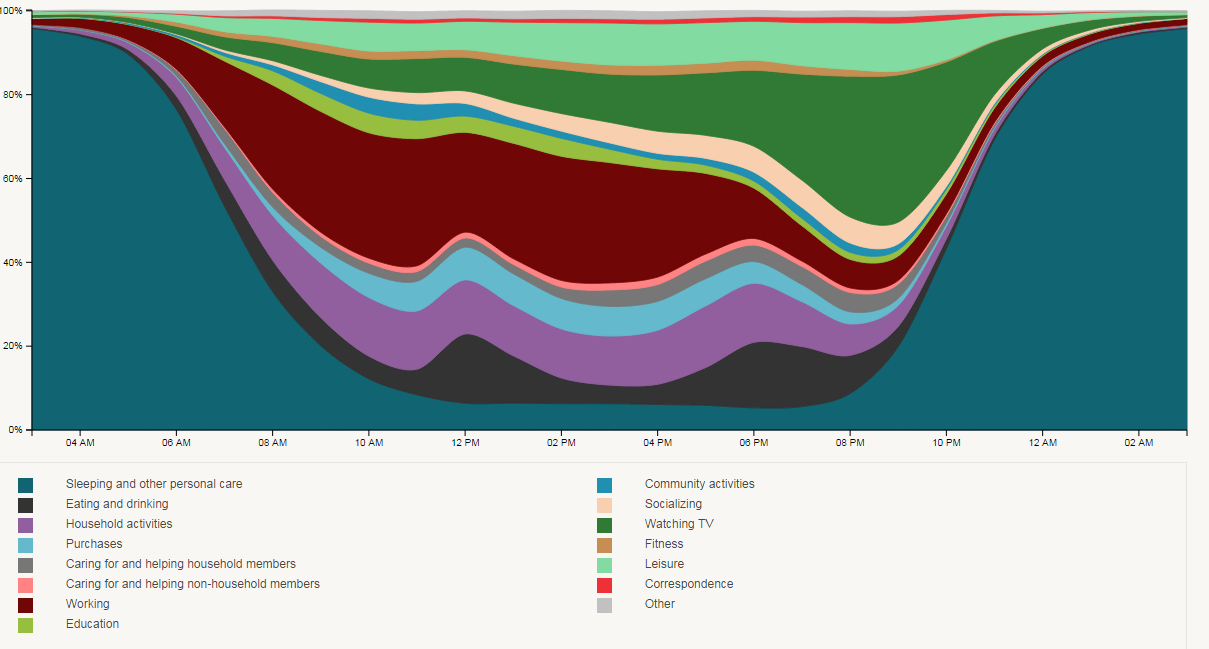
The Bureau of Labor and Statistics released a study this week on how American’s spend their time. This being Labor Day, I thought it was an interesting topic to explore. The website Retale created an informative info-graphic on the data.

How We Spend our Day

http://www.retale.com/info/busy-states-of-america/.


Obviously, we spend a great deal of time sleeping. I just wonder how soundly. How are you doing in that department? I’ve been thinking about sleep because of the quote at the header of this post. It’s from the Biblical book of Ecclesiastes. I saw it the other day as I was driving home from a political event that I attended. I was tired and frustrated. I had spent two hours knocking on doors of people’s houses, asking to speak to them about how they’d like their state to serve their needs. Most people didn’t want to speak to me. You see, I was knocking on their door from 6:008:00 PM and, if you’ll notice I was probably interrupting some valuable time in their day.

  • 20-30% of them were watching TV.
  • 10-20% were “relaxing” or reading (although I don’t really know what “relaxing” means)
  • 5% were “socializing”
  • 5% were shopping
  • 20% were cleaning the house, fixing dinner, and eating

And I was walking around their neighborhood trying to get them to spend a moment making their state a better place. How foolish am I?

As I drove home–hot, tired, and frustrated (it was a Tuesday night and I had been working all day, after all)–I saw the quote from Ecclesiastes on the marquee of a church. I thought to myself, “how nice. I will sleep well tonight.”

Now here’s the thing. If you look at the maroon section of this graph, you can see that the average American spends a great deal of time working. And I’m sure everyone is working very hard. The thing that I find appalling is how the rest of the graph is divided up. While it seems that we spend the majority of our time in noble pursuits like work, caring for loved ones, and maintaining a home; nearly 50% of this graph is made up of other, smaller categories like the ones I’ve listed above. Each of them on their own doesn’t seem like it’s taking up much time, but when you look at it all together (combine the greens, blues, and pinks) and you’ll see that the vast majority of our time is spent “doing other stuff.”

Of course, if you live in Houston, you should add another large chunk of time: sitting in traffic.

This is my point: I think American’s want America to be a greater place. I think all people want to be better than their current selves. But look at the line for “education.” At most, 4.5% of American’s are spending their time pursuing an education of any kind. That’s at less than 30 minutes a day. And yet, we spend nearly 3 hours of our day watching TV.

I don’t think we should all turn the television off for good and spend every waking moment being social activists, avid learners, and in meaningful conversation with others about how to make the world a better place. I just think some limits might be helpful. What if you committed to spending 2 hours a week improving yourself or your world (or both)? At first, you’ll find that, like me, you’ll be pretty lonely. Everyone else will be watching the football game while you’re taking a Spanish class. But this is how you change the world. You start doing something for yourself. Everyone around you will think you’re a little strange, but their quiet admiration will call into question how they spend their time. And then this graph gets flipped on its head, and suddenly your little corner of America is spending its time learning to ballroom dance, and speak Mandarin, and reading about the life of Winston Churchill, and participating in Town Hall Meetings. Heck, maybe someone will even run for City Council. And then the world IS a better place.

Two years ago, after a day of hard work, I would come home, pour a glass of wine, and turn on Bravo. That was it. That was the rest of my day. Or maybe I’d go out with some friends. I felt empty and unfulfilled. And, even though I was working incredibly hard, I felt restless when I slept. So I took a yoga class. And as I started to see the benefit in spending my “leisure” hours productively, I found myself wanting to learn as much as I could, from classes, books, and people. Learning is remarkably exponential that way. The more we do it, the more we want from it.

“What is the use of living, if it be not to strive for noble causes and to make this muddled world a better place for those who will live in it after we are gone?”
Winston Churchill

I firmly believe that the most voracious learners are the best teachers. When you passionately pursue knowledge, you can’t help but share it with the world. If our purpose on this earth is to leave it better than we found it and to leave a legacy for those who come after us–be it our families, our community, or our species–then we’d all better get to work.

Happy Labor Day everyone! Historically, today is a day when we recognize the work of organized labor (unions) in America. Grover Cleveland chose to set today aside to commemorate the thing that makes America great: hard working people working together to stand up for what they believe in. Labor Day isn’t about a day to rest. Labor Day is about celebrating how hard we work. So work hard! Not just in the time you spend earning a paycheck, but in the time you spend earning your place in history. Labor Day is about celebrating you, make sure you do something worth celebrating.